Running your system
How to get your air conditioner ready for summer
Get ready for summer with safe filter and airflow checks, a cooling test and a plan for any problems. Know what you can do and when to ask Caleb for help.

When everyone comes home hot and tired, you want to know the air conditioner is ready to cool the house. Before summer arrives, check its controls, the filter and the space around the outdoor unit, then give it a normal cooling run. You do not need to know how the machinery works to notice a problem and explain it to us.
What should you check before turning it on?
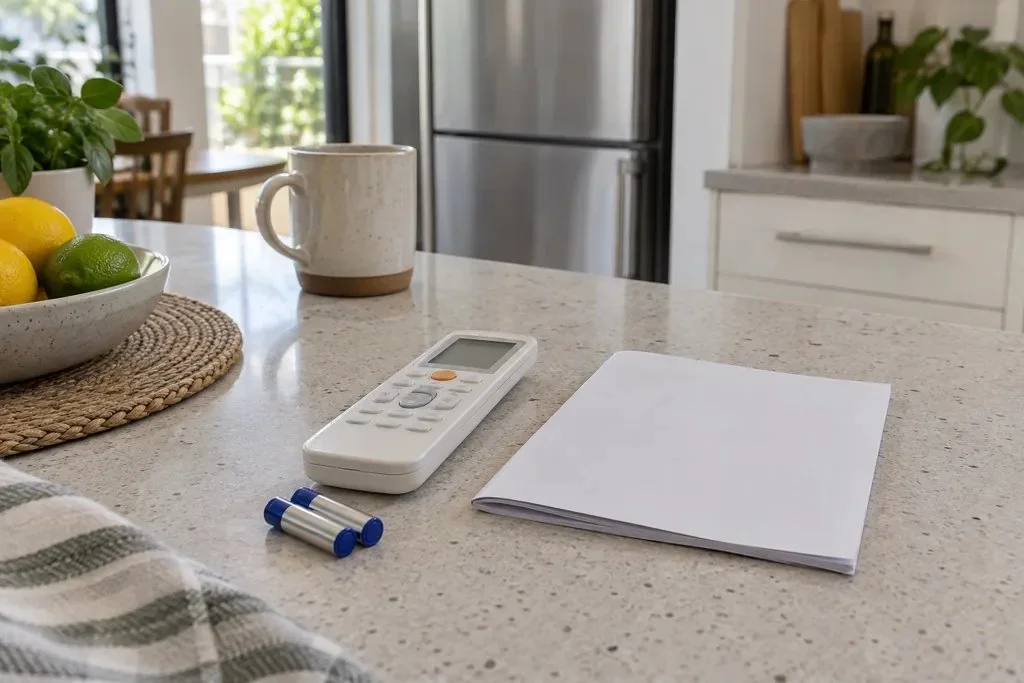
Start with the instructions for your model. They show you which filter you can clean, how to switch off the power for maintenance and what the controller buttons mean. If the booklet has gone missing, a model number from a safely visible label can help you find the right manual; a photo of the closed unit is useful if you cannot find the label.
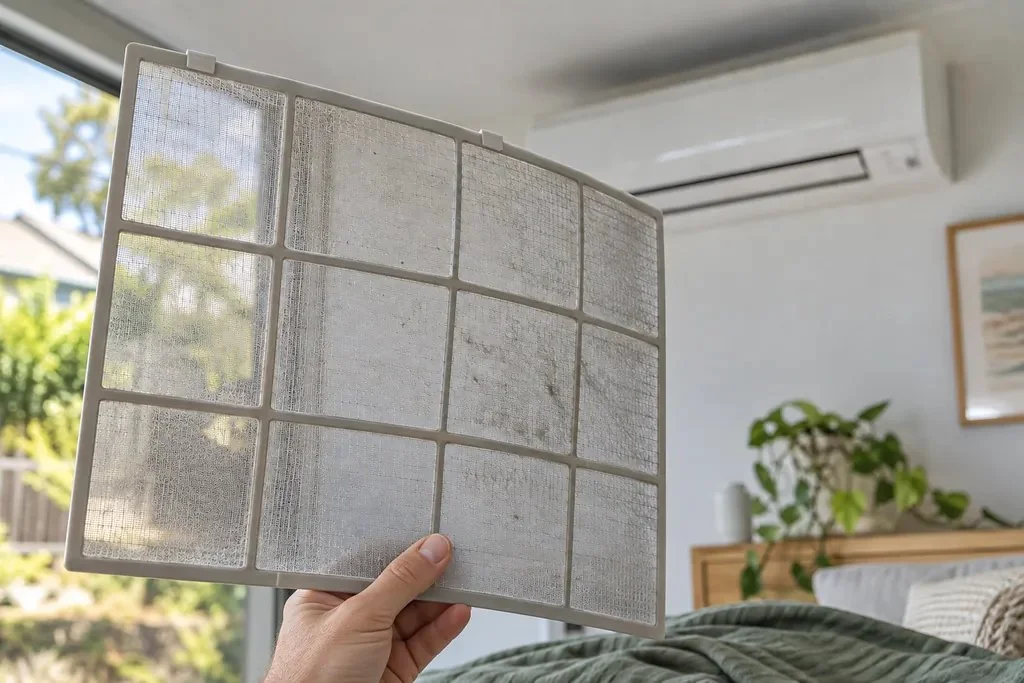
The filter catches dust as room air passes through the indoor unit. A blocked filter restricts that flow of air, making it harder for the system to cool the room. Check and clean only the filter your manual allows you to handle, and only if you can reach it safely. Our filter-cleaning guide explains how to plan this job without guessing which parts can be washed.
Why does the space around the unit matter?
Cooling moves heat from inside your home to the air outside. The outdoor unit needs clear space for air to move through it, so stored boxes, garden growth or a pile of leaves can get in the way. From a safe position on the ground, clear loose clutter around it and keep the openings unobstructed. Follow the model’s clearance instructions rather than assuming one distance suits every unit.
Inside, move furniture or curtains that cover the air openings. A ducted system carries air through passages called ducts to different rooms; it also draws room air back through a return-air grille. Keep that grille clear too. You are clearing the surrounding space, without opening equipment covers, reaching inside or washing the machinery.
How can you give it a useful cooling test?
Choose a day when the room is warm enough to need cooling, rather than waiting until the family needs it urgently. A test is a chance to see how the system behaves in ordinary use; it cannot guarantee that a fault will never develop or that the house will stay comfortable in every heatwave.
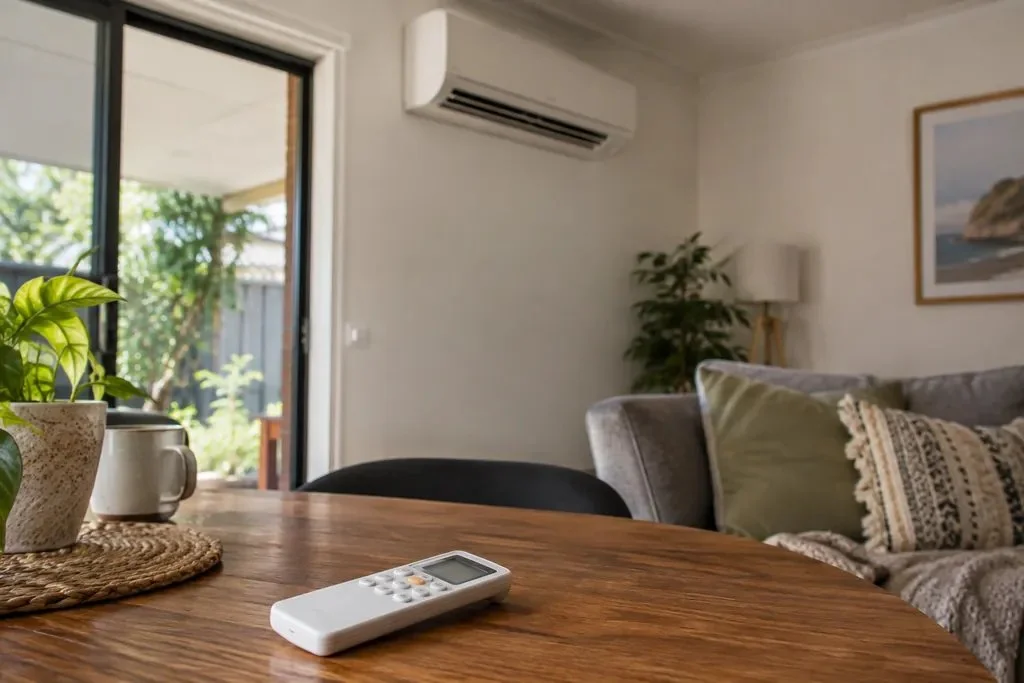
- Use the controller instructions to select cooling mode. Fan-only mode moves air but does not cool it.
- Set a temperature below the current room temperature and check that a timer is not delaying the start. Follow any startup delay described in the manual.
- Let the system run normally and notice whether the room becomes more comfortable. Check for an error message, an unusual sound or water dripping inside.
If it runs but the room stays warm, write down the settings and which rooms are affected. For example, if a living room cools but a bedroom does not, that is a useful detail to share. Our guide to an air conditioner that is not cooling walks through the first checks; you do not have to identify the fault yourself.

What can you prepare around the house?
Think about where the afternoon sun reaches your home. Existing awnings can shade a window before sunlight enters, while curtains and blinds help limit heat indoors. For example, closing the living-room blinds before leaving for work may help if that window gets strong afternoon sun. Close outside windows and doors while cooling, so warm outdoor air is not continually coming in.
These habits reduce the heat the system has to remove; they do not fix a fault. For more help with everyday use, our running-cost guide explains why weather, your home and your settings all affect electricity use.
When is it worth asking Caleb for help?
If the cooling test reveals a problem, or you cannot safely reach the filter, you can ask us about servicing and repairs. Tell Caleb what happened, the settings you used and the model if you know it. A photo of an error message can be more useful than trying to describe the display from memory.
A spring check gives you time to discuss the next step before hot weather makes cooling more pressing. We can assess the symptoms and advise on the attention your particular system needs. You do not need to turn a household check into a repair job.
Sources and further reading
Research checked 5 October 2026. For operation, maintenance and installation requirements, use the instructions for the exact equipment in your home.
Want a hand with this?
If the first test run has revealed a problem, send us the model and what happened.
Ask Caleb ↗