Running your system
Air conditioner not cooling? What to check first
Air con running but the room is still hot? Work through safe checks of the remote, airflow and room, and learn when to stop and ask for help.
When you get home to a hot room, an air conditioner that blows air without cooling is the last thing you need. Start with the remote settings, then check for anything blocking the air and look at what is happening in the room. Those checks can help you spot an operating issue; if cooling still does not return, the next step is a proper diagnosis.
Is the remote asking for cooling?
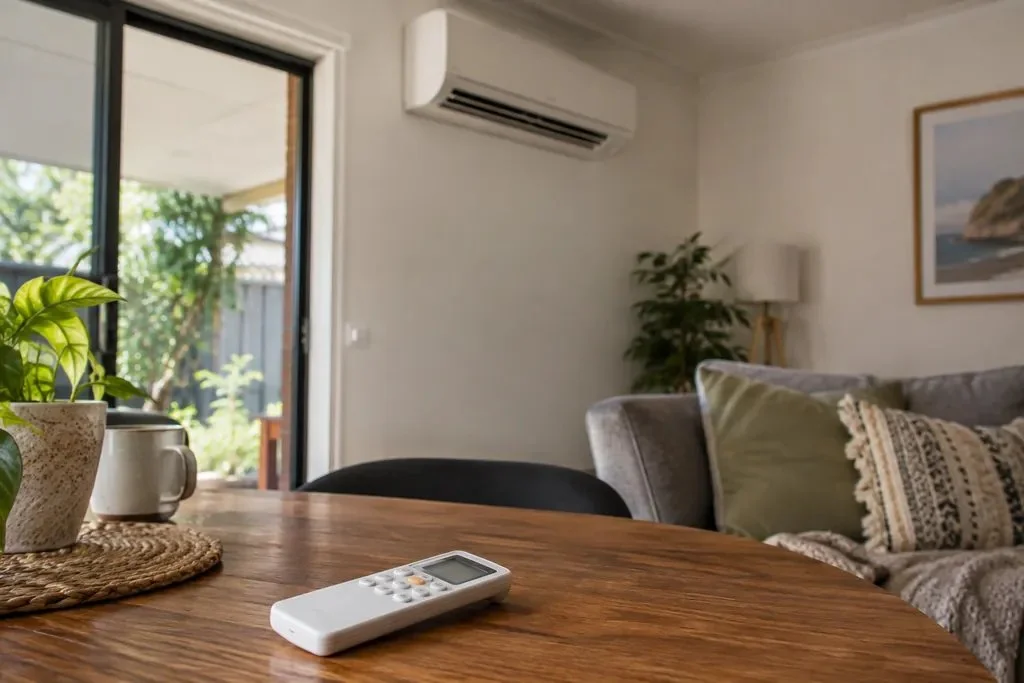
The fan moving air does not necessarily mean the machine is cooling. Fan-only mode circulates room air, while COOL mode tells the system to remove heat. The temperature you choose is the target room temperature, so it needs to be below the current room temperature for cooling to be requested.
Before changing several settings at once, take a photo of the remote display. Then use your model’s instructions to work through these checks so you know what changed:
- Select COOL mode. If the remote uses symbols, check the manual rather than guessing which symbol means cooling.
- Choose a target temperature below the room temperature. Check whether an on/off timer or app schedule is overriding your choice.
- If the remote display is blank or dim, follow its battery replacement instructions. Check that the indoor unit responds when you send a command.
Some systems delay cooling after a restart or mode change to protect the equipment. Allow the time described in your manual instead of repeatedly turning it off and on. On a multi-split system, where several indoor units share one outdoor unit, heating in another room can also prevent cooling on models that cannot do both together.
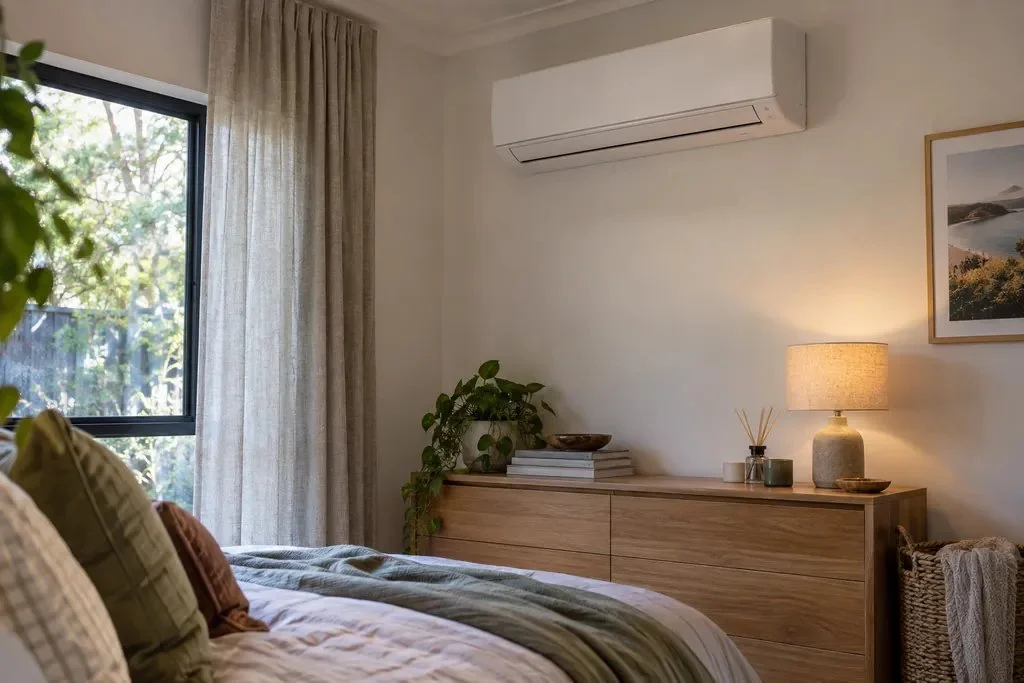
Can air move freely through the unit?
The indoor unit draws room air in and blows cooled air back out. A dusty filter or something blocking either opening can restrict that flow, so the room may stay uncomfortable even while you hear the fan. Move curtains or furniture away from visible air openings without reaching inside the unit.
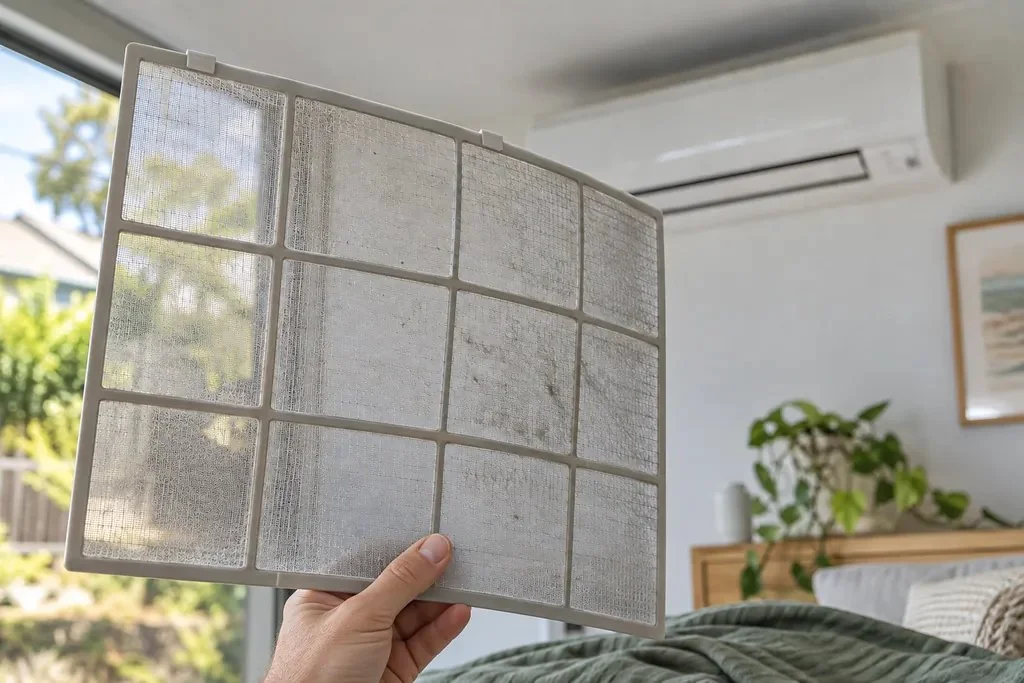
Check only a filter the manual identifies as suitable for owner cleaning, and only if you can reach it safely. Follow the manual’s instructions for turning off the power and cleaning the filter first; different filters need different care. If access needs a ladder, a roof-space visit or removal of fixed covers, leave it for a service visit. Our filter-cleaning guide explains what to look for.
From a safe position on the ground, look for leaves or stored items crowding the outdoor unit. It also needs clear airflow. Move loose items only where you can safely keep clear of the equipment; do not reach through its grille, wash its interior or remove panels.
Is the whole room hot, or only one area?
Close outside doors and windows while cooling, and shade windows receiving strong afternoon sun. This reduces the heat the system has to remove. Keep any ventilation required for other appliances, including gas appliances.
For example, imagine a living-room unit that cools that room well but leaves a bedroom hot when the bedroom door is shut. That may be a coverage problem rather than a failed machine: the cooled air has no clear route into the bedroom. For a ducted system, which carries air through passages to ceiling or floor outlets, note which rooms are affected and which zones are selected. A zone is a room or group of rooms controlled together.
It also helps to distinguish a sudden change from a room that has always struggled. If the unit worked well last week and now does not, tell us that. If it struggles mainly in afternoon sun or when cooling extra rooms, we can check whether its cooling capacity—the amount of heat it can remove—is suitable for that space.
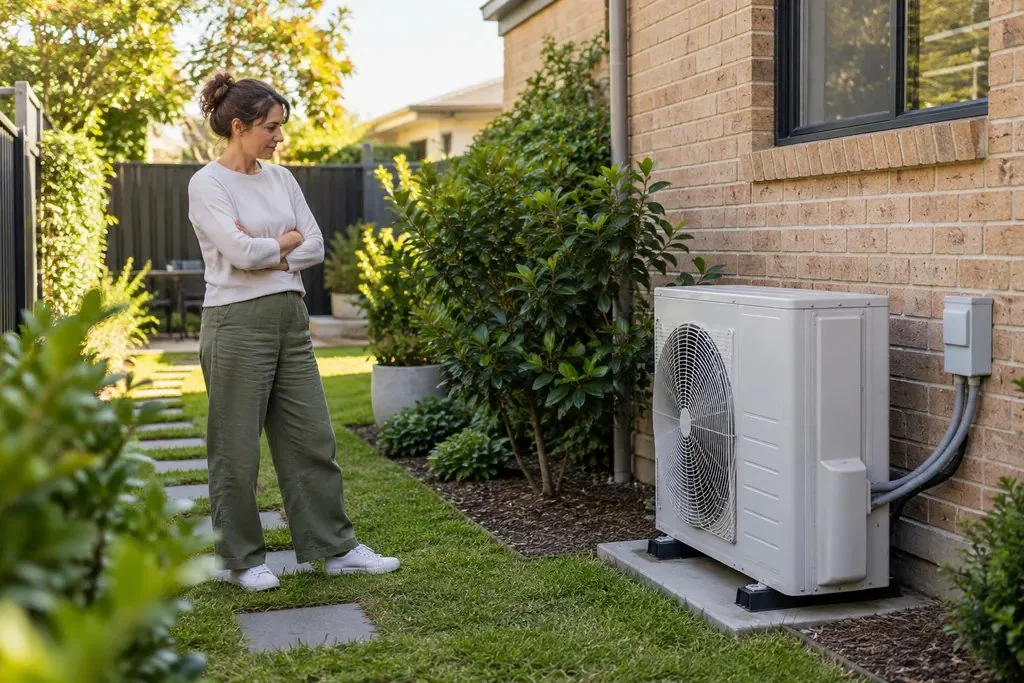
Does warm air mean it needs more gas?
Warm air alone cannot tell you the cause. Refrigerant, sometimes called “gas”, is the substance that carries heat through the system. A technician needs to check the equipment before deciding whether the problem involves refrigerant, airflow, controls or another fault.
If a refrigerant leak is found, the leak needs repair before the system is refilled. Adding more refrigerant without dealing with the leak leaves the cause unresolved. Leave refrigerant and electrical work to appropriately qualified technicians.
What should you tell Caleb if the checks do not help?
You do not need to diagnose the fault before contacting us. A few observations help us understand whether you need air-conditioning service or repairs and what to investigate:
- A photo of the remote settings and any error code or flashing indicator.
- The model number, if you can read it without climbing or opening equipment.
- Whether the airflow is weak, feels warm or cools some rooms but not others.
- When the problem began, whether it happens all the time and any recent changes or repairs.
If the safe checks do not restore cooling, stop using the system and arrange an assessment. Caleb can discuss what needs checking and explain the findings. If a significant repair is proposed, our repair-or-replace guide can help you weigh up the choices before deciding.
Sources and further reading
Research checked 5 October 2026. For operation, maintenance and installation requirements, use the instructions for the exact equipment in your home.
- Mitsubishi Electric — example model operating instructions and safety guidance (PDF) ↗
- Daikin Australia — controller operating modes ↗
- Daikin — residential troubleshooting checks ↗
- Daikin Australia — shading and clear filters ↗
- Australian Refrigeration Council — 2024 refrigerant handling code of practice, Part 2 (PDF) ↗
- Australian Government — heating, cooling and required ventilation ↗
Want a hand with this?
Tell us whether the fan runs, what the controller shows and when the room stopped cooling.
Ask Caleb ↗