Installation planning
Where should the outdoor air conditioner go?
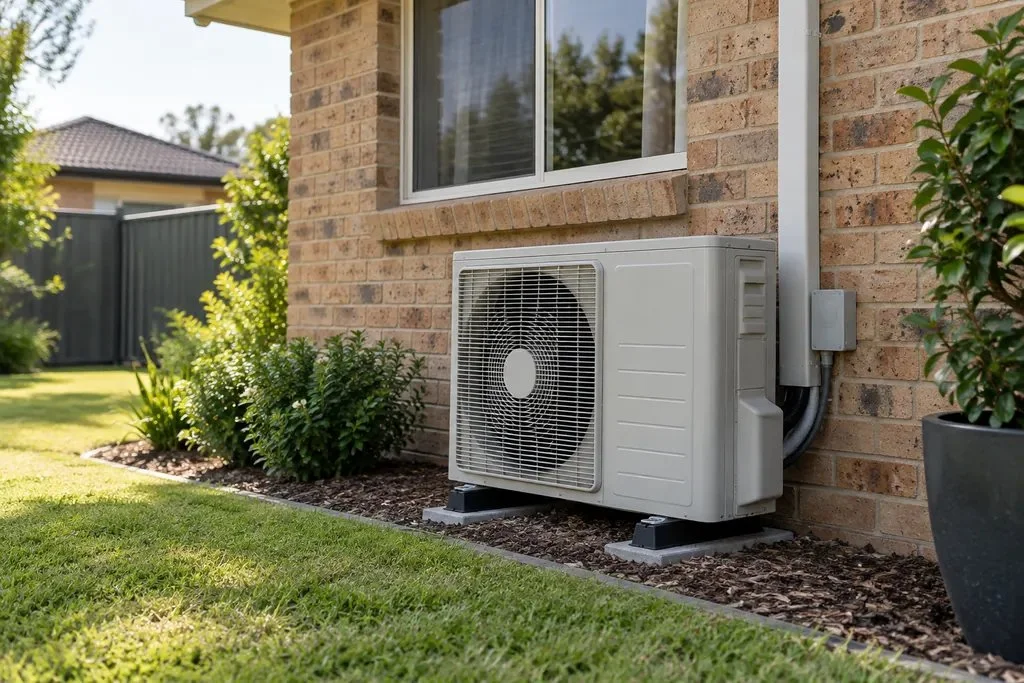
Choose an outdoor air conditioner position with space for airflow, safe servicing and drainage. Understand what to check near fences, bedrooms and neighbours.
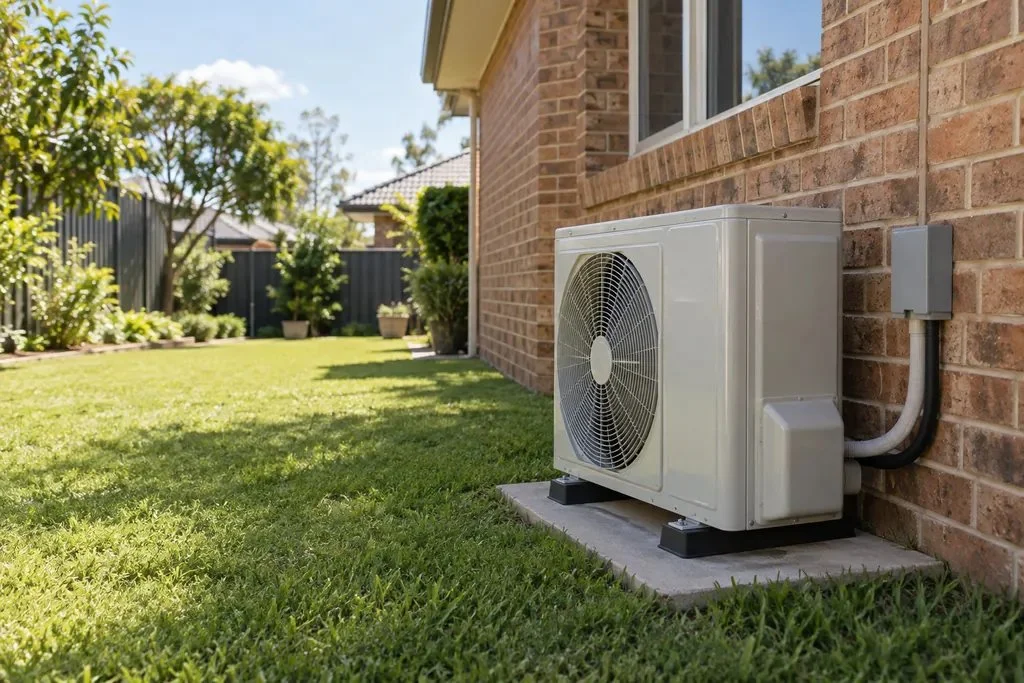
You might have a neat spot in mind for the outdoor unit, perhaps down the side of the house where it is out of sight. A suitable position needs clear airflow, solid support, safe access and care around nearby windows. It also needs to work with the indoor unit and your property’s rules. You can help choose the location without having to work out the technical details yourself.
Why does the outdoor unit need open space?
The outdoor unit does part of the work that keeps your room comfortable. In cooling mode, the system takes heat from inside your home and releases it outside. Air needs to move through the outdoor unit so that heat can leave.
That is why a tight gap between a wall and a fence needs careful checking. There must be enough clear space around the unit, called clearance, for the chosen model and the obstacles around it. Your installer should use that model’s instructions; a gap suitable for one unit may be unsuitable for another.
Think about what will be there after installation too. Bins, growing shrubs or a future screen can obstruct a space that is clear today. If you would like to hide the unit, discuss the screen before building it so airflow and maintenance access remain part of the design.
Is a ground base or a wall bracket better?
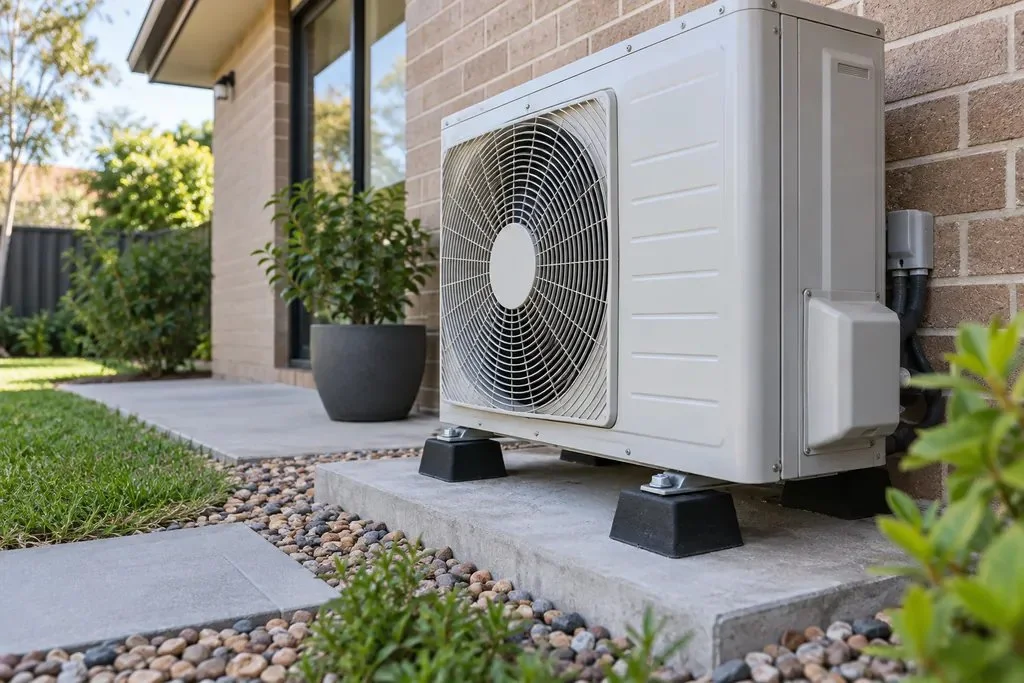
Either may be suitable, depending on the equipment and the building. A ground installation needs firm, level support that can carry the unit. A wall bracket is a support fixed to the building; its suitability needs checking rather than assuming any spare wall will do.
The useful question is how each option fits your home. For example, a ground unit in a narrow side passage might leave too little room to carry the washing basket through. Raising it on a bracket may introduce questions about the wall, vibration and how a technician will reach it.
Ask the installer to consider servicing as well as fitting the unit on day one. A high position or awkward balcony may need special access arrangements for future work. Have those arrangements and any associated costs explained before choosing a position mainly because it is less visible.
How close can it be to bedroom windows?
Consider your own bedrooms and outdoor sitting areas, as well as your neighbours’ bedroom and living-room windows. The outdoor unit makes sound while it runs. If you expect to use cooling overnight, explain that early so the installer can assess the model, location and mounting together.
There is no single distance from a window that guarantees a quiet or compliant installation. The equipment, nearby walls and fences, and where sound is heard all matter. A “quiet” label or a wall bracket alone does not settle whether a particular location is suitable.
Current NSW EPA guidance sets restricted times when air-conditioner noise should not be heard in a neighbour’s residential room: after 11 pm until 7 am on weekdays, and after 11 pm until 8 am on weekends and public holidays. A residential room includes places such as bedrooms and living rooms. There is an exception to these time restrictions while a Bureau of Meteorology severe or extreme heatwave warning is in force for the home’s weather district.
Offensive noise can still be addressed outside the restricted times. In everyday terms, that means sound that unreasonably disturbs someone’s comfort or rest. Choose the position with normal day-to-day use in mind, rather than relying on a heatwave exception to make a difficult spot workable.
Does it need to sit close to the indoor unit?
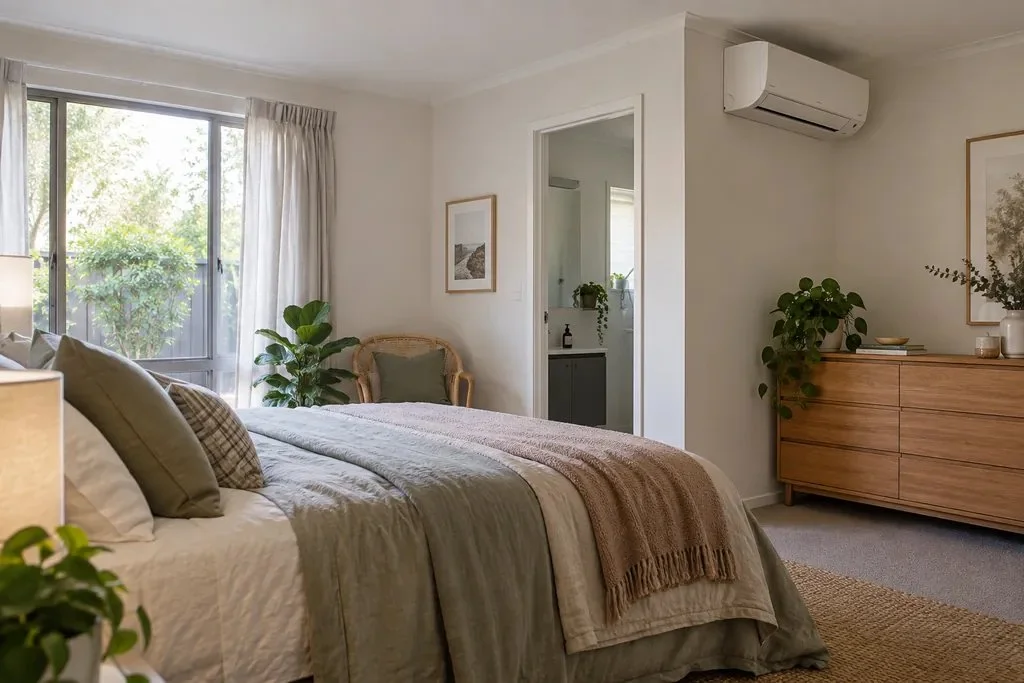
The indoor and outdoor units are linked by pipes carrying refrigerant, the substance that moves heat through the system. A nearby position can give those pipes a more direct route. But the installer also needs to check the allowed pipe length and difference in height for the exact equipment.
A slightly different outdoor location may be worth considering if it improves access or moves the unit away from a bedroom window. Ask what that changes about the pipe route, visible covers and installation price. Our guide to back-to-back installation explains the layout where the outdoor unit sits near the indoor unit on the other side of the wall.
Where will water go?
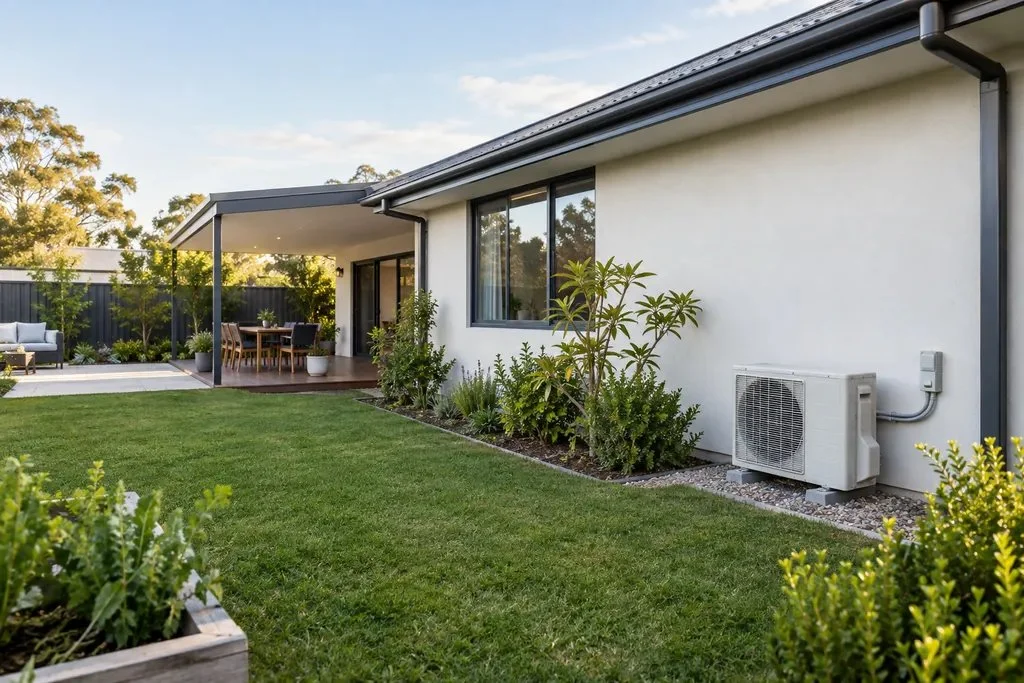
The outdoor unit can release water during operation, so the ground below it and the drainage arrangement need attention too. A spot beside a frequently used path may look convenient until you consider where that water will go.
Ask where water from the system will end up, including the indoor drain. Mention paths people use, areas that already collect water and any planned paving. The installer should decide a suitable arrangement for the equipment and site; you do not need to connect or alter drains yourself.
Do property approvals affect the position?
In NSW, some air-conditioning installations qualify as exempt development. This means planning or building approval is not needed if all the relevant standards are met. It does not mean every location is allowed: the proposed installation and property still need checking against the conditions.
For a strata home, check the scheme’s rules and required approvals before settling on a wall or balcony. If you rent, obtain your landlord’s written permission too. A position that is physically workable may still need a different layout to meet those requirements.
What can you show Caleb to help choose a spot?
Take photos from somewhere you can safely stand: a wide view of the side passage or yard and a closer view of the proposed wall. Include the ground, fences, nearby windows and gates, and explain where you want the indoor unit. Tell us how you use the space and whether you expect to run the system overnight.
You can send Caleb those details to start a discussion about your split-system installation. Photos help us understand the options; an on-site check can then confirm clearances, support, drainage and the route between the units before the position is agreed.
Sources and further reading
Research checked 5 October 2026. For operation, maintenance and installation requirements, use the instructions for the exact equipment in your home.
- Mitsubishi Electric — example outdoor installation manual; clearances are model-specific (PDF) ↗
- Daikin — outdoor-unit location considerations ↗
- NSW EPA — current neighbourhood noise rules ↗
- NSW Planning — air-conditioning units ↗
- NSW Government — strata renovations ↗
- Daikin — reverse-cycle heat transfer explained ↗
Want a hand with this?
Send a photo of the outside wall and any tight side access. We can talk through a sensible outdoor position.
Ask Caleb ↗