Costs & replacements
How to compare air conditioning installation quotes
Make sense of air conditioning quotes by comparing the rooms, exact models, installation work and final price, with plain explanations of unfamiliar terms.

Two air conditioning quotes can look very different when all you want is a comfortable home and a price you can plan around. Start by checking that they cover the same rooms, suitable equipment and the same installation work. Once those details are clear, the totals become much more useful. You do not need to understand every technical line before asking an installer to explain it.
Are both installers solving the same problem?
Give each installer the same picture of life at home: which rooms feel uncomfortable, when you use them and whether you want heating as well as cooling. Mention things such as strong afternoon sun, a home office used all day or bedrooms used with the doors shut at night. These details help the installer assess what the system needs to do.
For example, imagine one quote covers the lounge and another covers the lounge plus two bedrooms. The second total buys a different result, so it does not tell you which installer offers better value for the same job. Ask each to explain the rooms their design is intended to serve and which can be used together.
A split system usually serves a room or connected area using an indoor unit and an outdoor unit. A ducted system carries air through ducts — passages leading to outlets in the rooms. Ducted quotes may also describe zones, meaning rooms or groups of rooms controlled together. Ask how those zones fit your routine and what the system can heat or cool at the same time.
What do the model and capacity numbers mean?
Ask for the exact model numbers of the indoor and outdoor equipment. Two systems with the same brand name can have different capacities, controls and energy ratings. The model numbers let you check which equipment the price actually includes.
Capacity means how much heating or cooling the air conditioner can deliver. It is measured in kilowatts, written as kW. That output figure is different from electrical input, the power it draws from your supply, so a cooling capacity number is not a measure of how much electricity it uses.
If the proposed capacities differ, ask why each installer chose theirs. Room size matters, but so do the layout, windows and insulation. You are looking for an explanation that connects the choice to your home, rather than choosing the larger number because it sounds more capable.
Which installation details change the comparison?
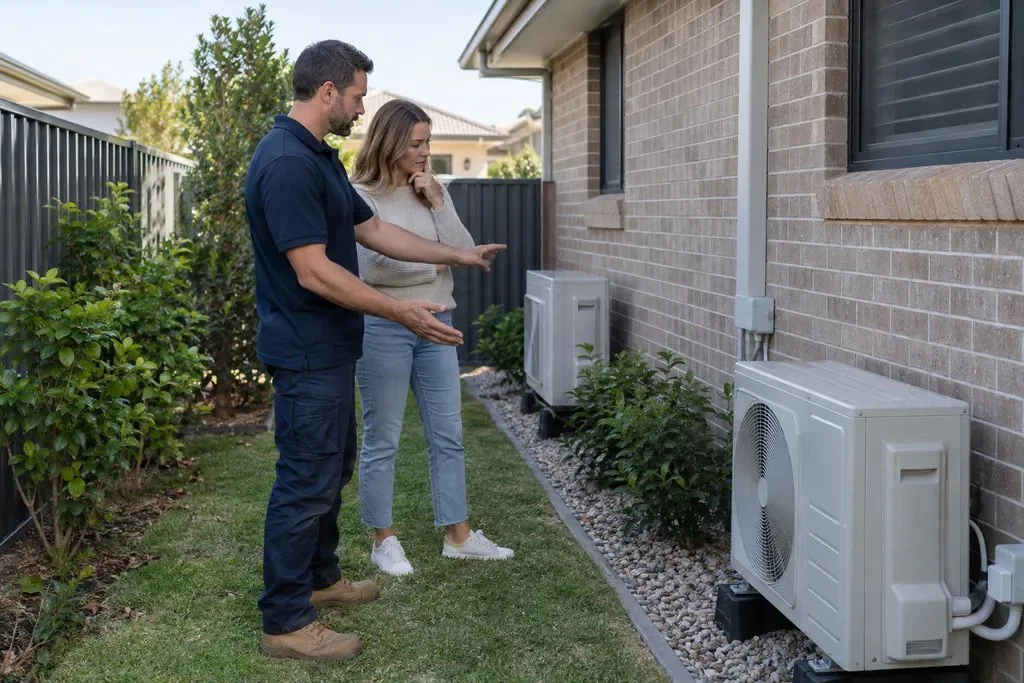
The installation scope means the work included in the price. It covers more than attaching the units: the installer has to plan their positions, connections, drainage and power supply. Ask about any assumption that depends on inspecting your property, especially when replacing an old system.
Use this table beside your quotes. If a detail is missing, mark it as a question rather than assuming it is included or excluded. Each installer can then fill in the gaps in writing.
| Check | What you need to know |
|---|---|
| Equipment and rooms | Exact models, heating and cooling capacity, rooms served and intended use together. |
| Controls | Which controls and zones are included? Is Wi-Fi included or an optional extra, and is setup covered? |
| Installation work | Indoor and outdoor positions, connection routes, outdoor support, drainage and electrical work. For ducted systems, include the ducts and room outlets. |
| Existing equipment | What is being removed and disposed of? Is anything being reused, and what checks are needed first? |
| Finishing | Who handles wall repairs, patching, painting and installation waste? |
| Price and arrangements | Total including GST, exclusions, estimated allowances, payment terms, quote expiry and proposed timing. |
| Completion and support | Testing, demonstration, manuals, written warranty information and who to contact with a problem. |
An allowance is an amount set aside for work whose final cost is not yet confirmed. Ask what it covers and what could change it. Also agree how changes to the work and price will be put in writing and approved before they proceed.
How can you compare likely running costs?
For models with a Zoned Energy Rating Label, compare similar capacities and features using the same climate zone. The label has separate heating and cooling star ratings. More stars means better efficiency among comparable models, which helps you weigh running costs alongside the purchase price.
The label also gives estimated annual electricity use in kilowatt-hours, written as kWh. That is electricity used over time, rather than the heating or cooling output in kW. Treat it as a comparison figure, not a prediction of your bill: your hours of use and conditions at home will affect consumption. Our guide to reading the energy label explains the figures in more detail.
Who will help after installation?
Ask who supplies the equipment, who installs it and who you should contact if it needs attention. Request the written equipment warranty and details of any installation warranty, including conditions and the claims process. These promises sit alongside your automatic Australian Consumer Law rights; a warranty does not replace those rights.
It is also sensible to check the contractor’s current NSW licence and the work it covers. Fixed air-conditioning installation and electrical wiring are specialist work with licensing requirements regardless of cost. You can use the NSW Government’s licence-check guidance linked below without having to judge someone’s qualifications from a quote alone.
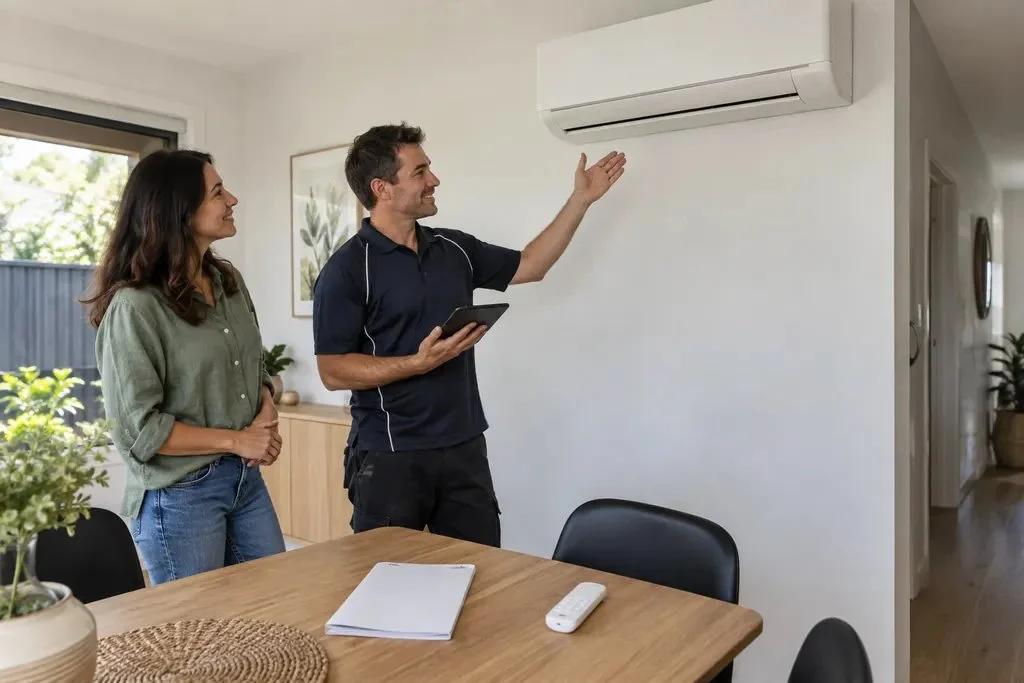
At handover, ask for the system to be tested and for a demonstration of the controls you will use, plus the manuals. This is your chance to practise changing between heating and cooling or choosing a zone, while someone is there to explain it.
What should you ask before choosing?
You can keep the follow-up short. These three questions bring the comparison back to the result you want at home:
- Why does this system suit the rooms and times of use we discussed?
- What is still an assumption, and what needs inspecting to confirm the price?
- Can you confirm the complete included work, exclusions and arrangements for any changes in writing?
Once you have those answers, you can weigh the complete price, useful features and how well each proposal suits your home. If you are unsure about a line in our quote, ask Caleb to talk it through. Tell us what you are trying to achieve and which detail is unclear, and we can explain what our proposal includes and why.
Sources and further reading
Research checked 5 October 2026. For operation, maintenance and installation requirements, use the instructions for the exact equipment in your home.
- NSW Government — getting clear written quotes ↗
- Energy Rating — understanding the zoned label ↗
- ACCC — warranties and consumer guarantees ↗
- NSW Government — checking a contractor’s licence ↗
- Mitsubishi Electric — choosing a split system and checking its specifications ↗
- Daikin — ducted systems, room zones and installation planning ↗
Want a hand with this?
Have two quotes that do not seem to cover the same job? Ask us what is included in ours.
Ask Caleb ↗